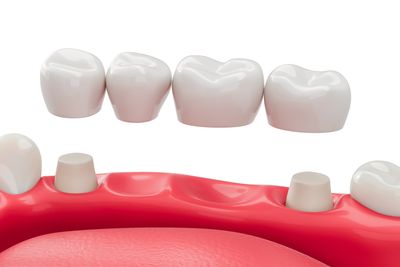
Post-Operative Instructions for Crowns and Bridges
What to Expect After Treatment
Crowns and bridges typically require two or more appointments to complete. During the first visit, the tooth or teeth are prepared and a temporary crown or bridge is placed to protect them while your final restoration is being made.
- If local anesthetic was used, your lips, tongue, cheek, and teeth may remain numb for several hours.
- Until the numbness has completely worn off:
- Avoid chewing.
- Avoid very hot foods or beverages.
- Be careful not to bite your lip, cheek, or tongue.
Temporary Crowns & Bridges
Your temporary restoration protects the prepared tooth and helps maintain its position while your final crown or bridge is being made.
- It is normal for a temporary restoration to feel somewhat different from your natural teeth.
- Occasionally, a temporary crown or bridge may loosen or come off.
- If your temporary comes off:
- Contact our office as soon as possible.
- Keep the temporary if you have it.
- Bring it with you so we can evaluate it and, when appropriate, re-cement it.
- Do not attempt to glue the temporary back in place yourself.
Sensitivity & Gum Discomfort
Some sensitivity and tenderness following treatment are normal.
- You may experience mild sensitivity to:
- Cold.
- Heat.
- Biting or pressure.
- The gum tissue around the treated tooth may feel sore or irritated for several days.
- Symptoms should gradually improve over time.
- Warm salt-water rinses may help soothe irritated gum tissue.
To make a salt-water rinse:
- Dissolve approximately 1 teaspoon of salt in a cup of warm water.
- Gently rinse and spit.
Take any prescribed or recommended medications as directed.
Eating & Chewing
While wearing a temporary crown or bridge:
- Avoid sticky or chewy foods such as:
- Gum.
- Caramel.
- Taffy.
- Avoid extremely hard foods or objects that could loosen or damage the temporary.
- When possible, chew on the opposite side of your mouth.
- Gradually return to normal chewing once your final restoration has been placed and your dentist has advised that it is appropriate.
Oral Hygiene
Good oral hygiene remains important while wearing a temporary restoration.
- Continue brushing normally, but use care around the temporary.
- Floss carefully around temporary crowns and bridges.
- When flossing:
- Gently pass the floss between your teeth.
- Slide the floss out through the side rather than pulling it upward.
- This helps reduce the chance of accidentally dislodging the temporary restoration.
Bite & Feel of the Restoration
Your temporary crown or bridge may initially feel somewhat different from your natural teeth.
- Minor differences in shape or texture may be noticeable.
- Your bite should still feel comfortable when your teeth come together.
- Contact our office if:
- The temporary feels noticeably “high.”
- Your bite feels uneven.
- You experience significant pain or discomfort when biting or chewing.
A simple bite adjustment may occasionally be needed.
IMPORTANT — DO NOT:
- DO NOT chew while your mouth is numb.
- DO NOT eat sticky or chewy foods around the temporary.
- DO NOT bite extremely hard foods or objects with the temporary.
- DO NOT pull floss upward around a temporary crown or bridge.
- DO NOT ignore a loose or missing temporary restoration.
- DO NOT attempt to glue a temporary crown or bridge back in place yourself.
When to Call Our Office
Please contact our office if:
- Your temporary crown or bridge becomes loose or comes off.
- Your temporary restoration breaks or becomes damaged.
- You experience persistent or worsening pain.
- Sensitivity becomes severe or is not gradually improving.
- Your bite feels high or uneven.
- You experience significant discomfort when biting or chewing.
- You develop significant swelling.
- You have any other concerns about the treated tooth or temporary restoration.
© 2026 John E. Sullivan DDS, P.C.
This document is the property of John E. Sullivan DDS, P.C. and is intended for use within this practice only.