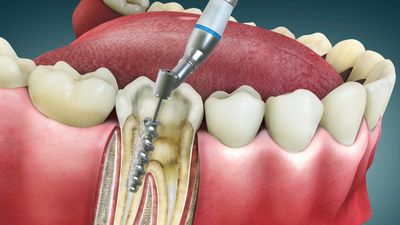
Post-Operative Root Canal Care
What to Expect After Treatment
Root canal treatment may require one or more appointments depending on the tooth and the condition being treated.
- If local anesthetic was used, your lips, tongue, cheek, teeth, or surrounding tissues may remain numb for several hours.
- Avoid chewing while numb to prevent accidentally biting your cheek, lip, or tongue.
- Mild to moderate tenderness is common for several days following root canal treatment.
- The treated tooth may feel sore when biting or chewing.
- Some patients notice a dull ache after treatment even if the tooth was not painful beforehand.
- This discomfort should gradually improve as the surrounding tissues heal.
Temporary Filling or Crown
A temporary filling or temporary crown may be placed to protect the tooth between appointments or until the final restoration is completed.
- A small amount of temporary filling material may wear down or chip.
- If the entire temporary filling comes out or a temporary crown comes off, contact our office.
- Avoid sticky or chewy foods that could dislodge the temporary restoration.
- Avoid biting extremely hard foods or objects such as ice, pens, pencils, or fingernails.
- When possible, chew on the opposite side until the tooth has received its final restoration.
Pain Control & Medications
- Take any prescribed or recommended medication exactly as directed.
- Over-the-counter pain medications such as ibuprofen or acetaminophen may be recommended when appropriate for you.
- Do not exceed the recommended dosage.
- Do not combine different NSAID medications, such as ibuprofen and naproxen, unless specifically instructed to do so.
- If antibiotics were prescribed, take them exactly as directed.
- Do not change the dose or discontinue a prescribed medication unless instructed by our office or another healthcare professional.
- Contact our office if pain becomes severe, progressively worsens, or cannot be adequately controlled with the recommended medication.
Oral Hygiene & Rinsing
- Continue brushing and flossing normally unless you were given different instructions.
- Be gentle around a temporary restoration.
- Warm salt-water rinses may help soothe irritated gum tissue.
- To make a salt-water rinse:
- Dissolve approximately 1 teaspoon of salt in a cup of warm water.
- Gently rinse and spit.
- Do not aggressively rinse if the surrounding tissues are particularly tender.
Bite & Tooth Sensation
- The treated tooth may initially feel slightly different from the surrounding teeth.
- Mild tenderness when biting can occur following root canal treatment.
- If the tooth feels noticeably high or your bite feels uneven, contact our office.
- A bite adjustment may occasionally be needed.
Final Restoration & Long-Term Care
A tooth that has undergone root canal treatment often requires a permanent restoration to protect it and restore normal function.
- Complete the final restoration within the timeframe recommended by your dentist.
- Posterior teeth frequently require a crown or other cuspal-coverage restoration because they may be more susceptible to fracture after root canal treatment.
- Some teeth, particularly certain anterior teeth, may not require a crown depending on the amount of remaining tooth structure and the clinical situation.
- Avoid excessive chewing on the treated tooth until the permanent restoration has been completed.
- Delaying the final restoration may increase the risk of fracture, leakage, or reinfection.
- Follow-up examinations and radiographs may be recommended to evaluate healing around the root of the tooth.
- The timing of follow-up imaging will depend on the individual tooth and your dentist’s recommendation.
IMPORTANT — DO NOT:
- DO NOT chew while your mouth is numb.
- DO NOT chew extremely hard or sticky foods on a tooth with a temporary restoration.
- DO NOT bite ice, fingernails, pens, pencils, or other hard objects.
- DO NOT ignore a lost or broken temporary filling or crown.
- DO NOT exceed the recommended dose of pain medication.
- DO NOT combine ibuprofen and naproxen unless specifically instructed.
- DO NOT delay your final restoration beyond the timeframe recommended by your dentist.
- DO NOT ignore significant swelling, severe pain, or a bite that feels noticeably uneven.
When to Call Our Office
Please contact our office if you experience:
- Severe or progressively worsening pain.
- Significant swelling.
- Pain that does not gradually improve.
- A lost, loose, or broken temporary filling or crown.
- A bite that feels high or uneven.
- Fever, drainage, or other signs of possible infection.
- A significant reaction to any prescribed medication.
- Any other concerns about your tooth or healing.
© 2026 John E. Sullivan DDS, P.C.
This document is the property of John E. Sullivan DDS, P.C. and is intended for use within this practice only.